November 22, 2026
A Time for Everything
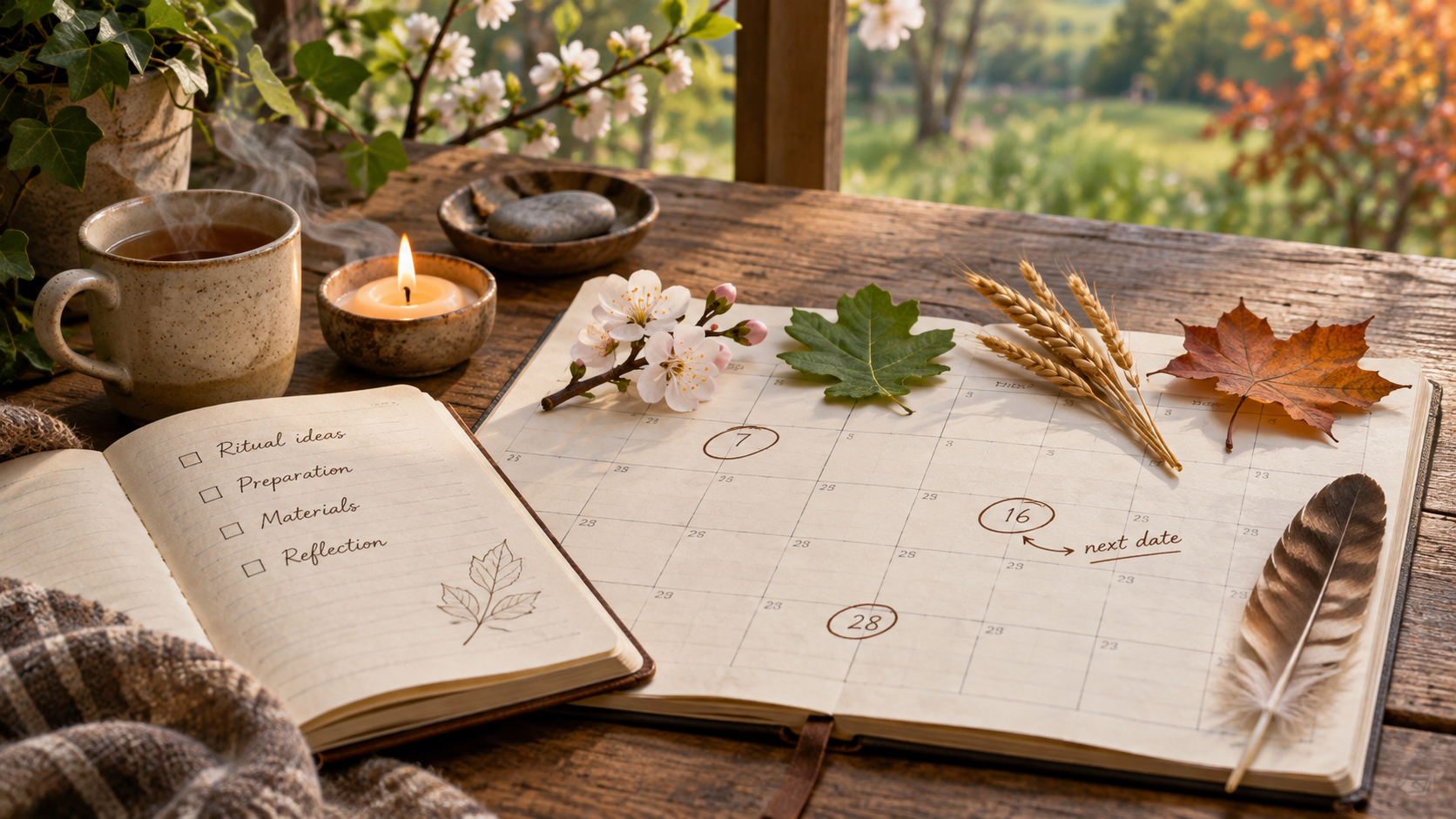
My Ritual Calendar
The Earth goes around the Sun. The Moon goes around the Earth. Both have been doing this for a very long time, and neither seems particularly interested in my schedule.
Meanwhile, I’ve filled my calendar with meetings, appointments, birthdays, and reminders to take out the trash. It’s easy to forget that my life is still part of much older rhythms.
For most of human history, the changing seasons determined when we planted, harvested, celebrated, and rested. The Moon marked the passage of time and illuminated our nights. Today, with electric lights, heated houses, and strawberries in January, I can ignore all that if I choose.
I’d rather not.
So I’ve put together a ritual calendar based on the cycles of the Sun and Moon. It’s not a collection of commandments or an attempt to reconstruct some ancient religion. It’s simply a way to remind myself, throughout the year, to pay attention.
The Ritual Calendar
The Ritual category is where I collect ideas and instructions for rituals tied to these occasions. Each one includes the next date it occurs, so there’s always something coming up to plan for.
These aren’t organized events or invitations to gather somewhere. They’re rituals you can perform yourself, alone or with others, adapting them to your own beliefs and circumstances.
Think of it as a collection of opportunities, not a schedule of obligations. Pick something that interests you, put it on your calendar, and make it your own.
The Full Moons — A Time to Connect
The Full Moon is a time to recognize and strengthen my relationships with the world around me. Through meditation, invocation, and reflection, I turn my attention toward the many beings with whom I share existence, seeking understanding, respect, and a deeper sense of connection.
In Practical Animism, I approach the world with the belief that all things possess a spark of consciousness. The wolf, the oak, the river, and even the stones beneath my feet have their own existence and desires.
Each full moon offers an opportunity to explore one of those relationships. My Wolf Moon ritual, for example, invokes Wolf to explore solitude, community, and perseverance.
The Blue Moon — A Time to Wander
A Blue Moon is an uncommon opportunity to step outside familiar patterns. Its rituals encourage curiosity, experimentation, and the exploration of possibilities I might ordinarily overlook.
For this calendar, I use the traditional seasonal Blue Moon: the third full moon in an astronomical season containing four.
There’s nothing supernatural about an extra full moon. But rarity is a good excuse to do something different. Question an assumption, explore an unfamiliar idea, or attempt something I’ve been avoiding.
The Solstices — A Time to Turn
The Solstices mark the extremes of the Sun’s annual journey through our sky. They are times to recognize the turning of the year and reflect on the cycles of growth, decline, rest, and renewal that shape all life.
Summer Solstice — The Fullness of Light
The longest day celebrates abundance, vitality, and the energy of life. Yet it’s also the beginning of the return toward darkness. Even at the height of summer, change is underway.
Nearby traditions: Litha (modern Pagan), Midsummer (European traditions), St. John’s Eve and Day (June 23–24).
Winter Solstice — The Return of Light
The longest night is a time for stillness, endurance, and hope. Winter may have only just begun, but the days are growing longer. Nothing, not even the longest night, lasts forever.
Nearby traditions: Yule (Pagan and Norse traditions), Dongzhi (Chinese winter solstice festival), Shab-e Yalda (Persian tradition), Christmas (December 25).
The Equinoxes — A Time for Balance
The Equinoxes mark the two occasions each year when day and night are nearly equal. They invite me to examine the balance in my life: between action and rest, giving and receiving, independence and community.
Spring Equinox — Finding My Balance
As daylight overtakes darkness, I consider what needs attention, what I’ve neglected, and where to direct my energy in the growing season.
Nearby traditions: Ostara (modern Pagan), Nowruz (Persian New Year, around March 20–21).
Autumn Equinox — Keeping My Balance
As darkness overtakes daylight, I take stock. What have I accomplished? What remains unfinished? What should I carry forward, and what should I leave behind?
Nearby traditions: Mabon (modern Pagan), Harvest Home (traditional harvest celebrations), Shūbun no Hi (Japanese Autumnal Equinox Day).
The Cross-Quarter Days — A Time to Act
Halfway between the solstices and equinoxes are four more occasions. These have long been associated with seasonal festivals, and I’ve given them names that reflect what I want to practice.
Unlike the solstices and equinoxes, which invite reflection on the changing seasons, these four days emphasize action.
Day of Stirring — Awakening Possibility
February 3, 2027
The Day of Stirring is a time to recognize the first movements of change, even when they are barely visible. I look for possibilities beginning to awaken, nurture what has been dormant, and prepare for the growth ahead.
Winter still has a firm grip, but beneath the surface things are changing. Buds are forming, roots are preparing, and the days are growing longer.
This is a time to begin something small, offering a little encouragement to whatever is ready to emerge.
Nearby traditions: Imbolc / St. Brigid’s Day (February 1), Candlemas (February 2).
Day of Joining — Building Relationships
May 5, 2027
The Day of Joining celebrates the relationships that make existence possible. I recognize my connections with people, animals, plants, places, and things, and seek ways to strengthen them through cooperation, affection, and mutual respect.
By May, the natural world is busy making connections. Flowers invite pollinators, birds build nests, and roots exchange nutrients with fungi.
It’s a good time to remember that independence is largely an illusion. I exist because of countless relationships, most of which I barely notice.
Nearby traditions: Beltane / May Day (April 30–May 1), Walpurgis Night (April 30).
Day of Offering — Giving Something Back
August 7, 2027
The Day of Offering is a time for gratitude expressed through action. I recognize the gifts I’ve received from the world and consider what I can give in return, through generosity, service, care, or sacrifice.
By August, the growing season is producing its rewards. Everything I eat, wear, or use exists because of the contributions of countless other beings.
An offering need not be elaborate. Help a neighbor. Repair something neglected. Plant a tree. The important part is that the gift is genuinely useful to someone or something other than myself.
Nearby traditions: Lughnasadh / Lammas (August 1), First Harvest (modern Pagan).
Day of Remembrance — Honoring What Has Been
November 7, 2027
The Day of Remembrance is a time to honor those who came before me, relationships that have ended, and the lives and experiences that helped make me who I am. Through memory, gratitude, and reflection, I acknowledge that what is gone continues to shape what remains.
Autumn is a season of endings. Leaves fall, gardens die back, and the world settles toward winter.
I remember not just people who have died, but animals I’ve loved, places that no longer exist, friendships that have ended, and earlier versions of myself.
Nearby traditions: Samhain (October 31–November 1), All Hallows’ Eve (October 31), All Saints’ Day (November 1), All Souls’ Day (November 2), Día de Muertos (November 1–2).
Putting It Into Practice
I don’t intend to perform elaborate ceremonies for every occasion. Some rituals may involve invocation, meditation, or a carefully prepared sacred space. Others might be as simple as taking a walk, sharing a meal, or doing something kind.
The important part is doing something.
I have one rule for Practical Animism: my practice must have a positive effect independent of my religious beliefs. Even if everything I believe about spirits and sparks turns out to be wrong, the things I do should still make life a little better.
The Sun will keep rising, the Moon will keep circling, and the seasons will come and go whether I notice them or not.
I’d rather notice.